
In the Cíes Islands, everything begins with the sea.
This is not just a turn of phrase. It is a reality that has shaped the way people have lived, worked, and eaten in this environment for centuries. Before becoming a protected natural destination, the islands were part of an economy directly tied to the resources offered by the Atlantic.
For generations, activity in the Cíes was centred on fishing, shellfishing, and small-scale operations linked to the sea. There were also salting facilities, where fish was processed for preservation and distribution. It was a demanding way of life, shaped by the weather, the tides, and the need to make the most of what the environment provided.
That context has not disappeared. It has changed form, but it is still present.
That context has not disappeared…
It has changed form, but it is still present
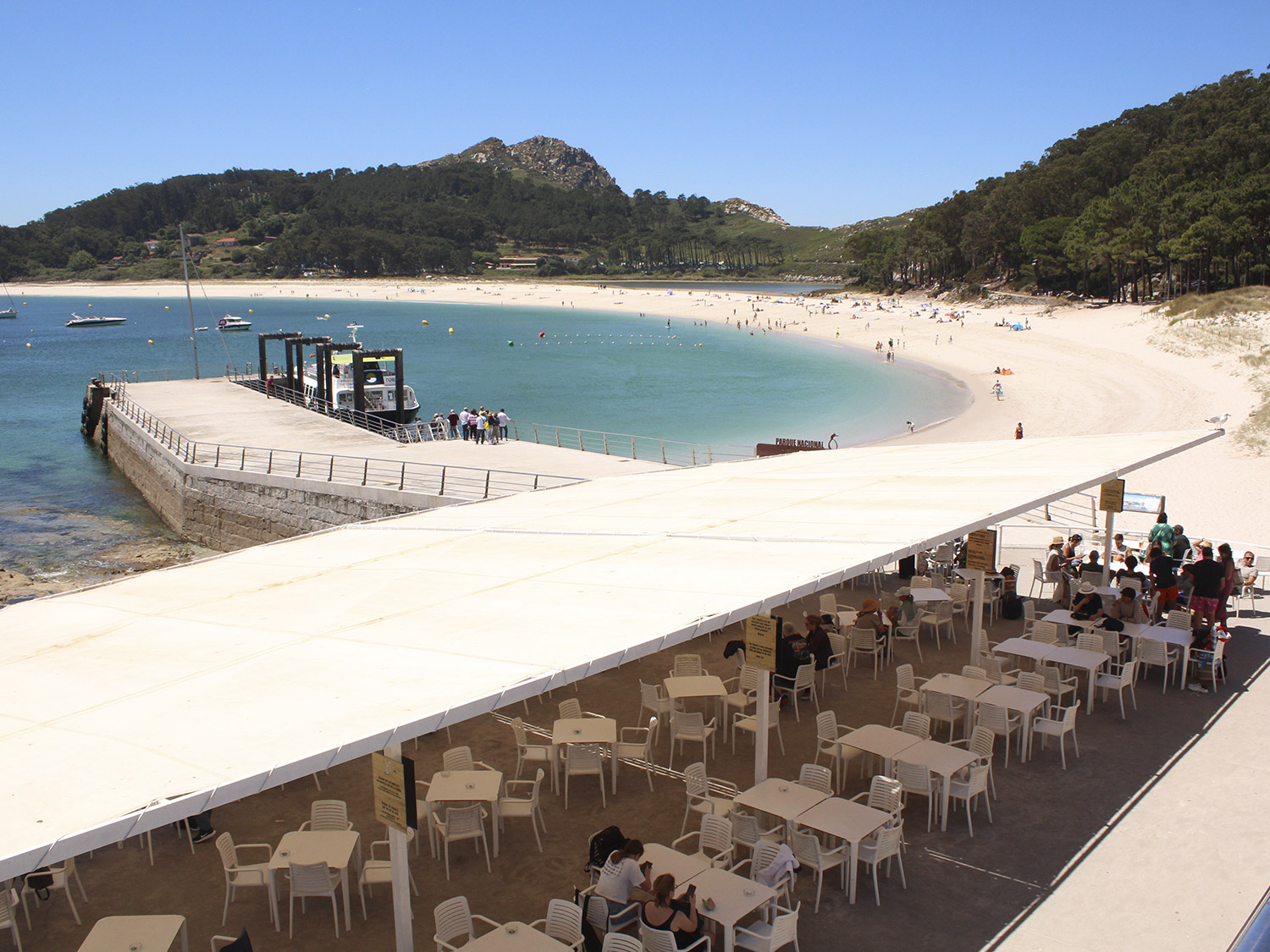
The products sourced in this territory are not interchangeable. They depend directly on the surrounding sea. The waters of the Vigo estuary and the Atlantic environment create very specific conditions:
This results in:
This leads to raw materials with their own distinct characteristics, recognisable and closely tied to their origin.
The cuisine you find today is not a replica of the past, but it is influenced by it.
Techniques have evolved, presentation has changed, and the experience has adapted to today’s visitor. But the foundation remains the same: respect for the product, its origin, and its seasonality.
In a place like this, cuisine cannot be separated from its surroundings without losing its meaning.
And that is where Restaurante Rodas finds its role.
In Galicia, seafood is not seen as something exceptional, but as a natural part of the table. It is part of the way people eat, celebrate, and share. In the Rías Baixas, and especially around the Vigo estuary, this relationship with the sea is even more evident: the product arrives shaped by the Atlantic, the tides, and a seafaring tradition that remains deeply present in Galician cuisine.
During a visit to the Cíes Islands, this connection becomes even more meaningful. You are in a territory surrounded by the sea, facing one of Galicia’s most important estuaries, and that presence is reflected directly in the gastronomy. Eating seafood here is not just ordering a typical dish: it is tasting a part of the landscape.
Within Galician food culture, there are products that almost serve as an introduction to the territory:
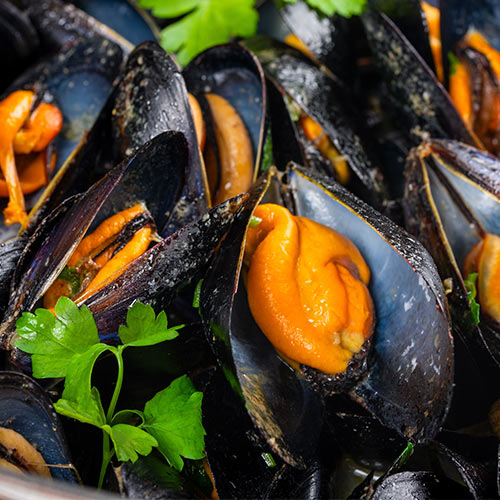
Mussels
They are one of the great symbols of the Galician estuaries. They are prepared in a simple way, often steamed, precisely because they do not need much embellishment. What matters is the flavor of the product itself.
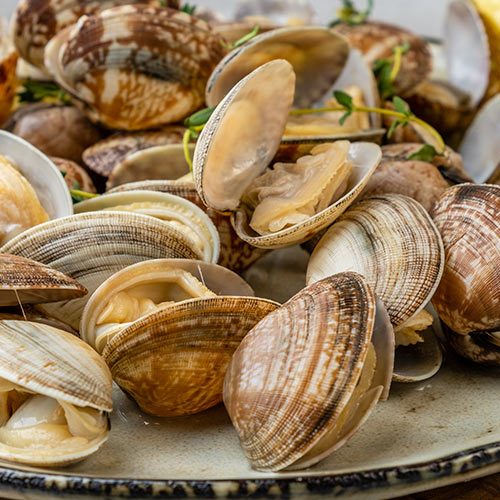
Clams
They are linked to a slower style of cooking, closely associated with stews, seafood sauces, and traditional recipes. They are one of those products that clearly reflect the relationship between Galician cuisine and the seabed of the estuary.
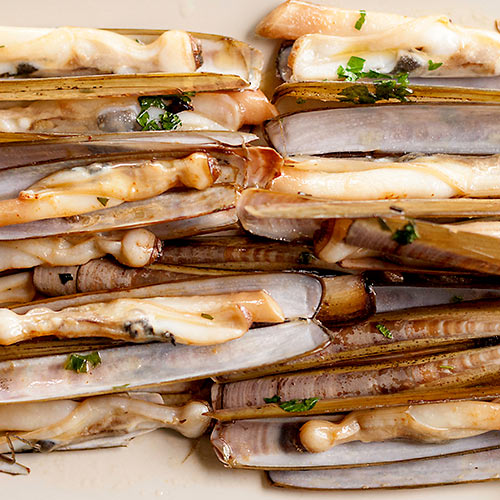
Razor clams
They have a clean, direct, and very distinctive flavor. They are usually grilled, with just a touch of oil, garlic, or lemon, respecting that very Galician idea of doing little when the product is good.
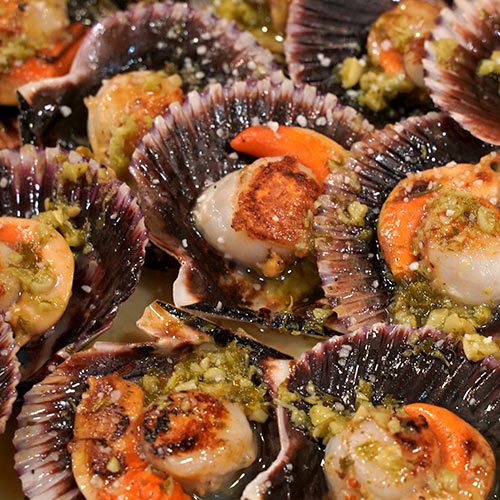
Queen scallops
They hold a special place on the Galician table. Small, intense, and strongly associated with high-quality tapas, they work perfectly as a starter, inviting sharing and setting the tone with a clearly Atlantic flavor.
Galician cuisine is not based only on seafood. Its strength also lies in the way it combines product, tradition, and generosity. At Restaurante Rodas, this idea takes shape in a menu designed for the surroundings: local dishes, portions to share, and options that fit naturally into a day in the Cíes Islands.
Octopus is probably one of the most recognizable dishes from Galicia. Cooked to perfection, sliced, and served with olive oil, coarse salt, and paprika, it perfectly reflects the philosophy of Galician cuisine: few ingredients, the product at the center, and a direct, honest flavor.
In the context of the Cíes Islands, octopus fits especially well because it connects with this coastal cuisine. It is a must-try dish for first-time visitors to Galicia, but it also remains a classic for those already familiar with the local gastronomy.
Squid is another dish that works very well. It has something simple and popular, yet deeply connected to the surroundings: it is ordered to share, placed in the center of the table, and works equally well as a starter or as part of a more complete meal.
Talking about Galicia also means talking about fish. Hake, sea bass, turbot, sardines, mackerel, or seasonal fish are part of a culinary tradition strongly shaped by what the sea provides.
In this kind of cuisine, fish does not need elaborate treatment. Grilling, baking, olive oil, boiled potatoes, or a simple garnish are usually enough to create a meaningful dish. The key is to respect the product and not mask its flavor.
At Restaurante Rodas, the presence of fish from the Vigo estuary reinforces that connection between the menu and the territory.
Padrón peppers are one of the most popular starters in Galicia. Small, green, fried, and served with salt, they have an informal character that fits perfectly into a shared meal.
It is a simple dish, but deeply cultural. It represents that side of Galician gastronomy that does not need formality: dishes in the center, several portions to share, and conversation flowing at its own pace.
Rice dishes play an interesting role in this context. They are not the most traditional Galician dishes in a strict sense, but they fit very well into a seafood-oriented cuisine designed for sharing.
A paella or seafood rice works as a group dish, something to enjoy slowly and on special occasions. In a place like the Cíes Islands, where visits are often shared with family, partners, or friends, these dishes help turn the meal into a central moment of the day.
Although seafood is the foundation of the experience in the Cíes Islands, Galician gastronomy goes much further. There are dishes that complete this identity and help you understand the region’s cuisine as a whole: a mix of sea and land, simple recipes, and highly recognizable products.
Velvet crabs are among the most highly prized shellfish in Galicia. More intense than other crustaceans, they have a very concentrated and distinctive flavor.
They are not always consistently available on the menu, as they depend heavily on the season and availability, but when they are, they are one of the options most closely linked to the Galician sea. They are usually served boiled, with very little intervention, precisely to preserve that strong, distinctive flavor.
Galicia is not just coastline. The inland areas play a huge role in its food culture, and Galician beef is one of its great references.
High-quality, carefully sourced meat, usually served grilled or barbecued, without too many seasonings. In a setting like the Cíes Islands, this type of dish works as an alternative to fish and seafood, bringing balance to the menu and offering options for all kinds of visitors.
Here we enter the realm of more traditional, home-style cooking. Swiss chard stew is a clear example of simple Galician gastronomy, based on vegetables, potatoes, and slow preparations. It is not a dish designed to stand out visually, but it does bring flavor and coherence to the table.
This type of recipe connects with the most everyday side of Galician cuisine, the one that does not always appear in guidebooks, but truly forms part of the territory.
One of the most classic ways to finish a meal in Galicia. Tetilla cheese, mild and creamy, is paired with quince paste to create a very recognizable sweet-and-savory contrast. It is a simple way to end the meal without turning to more elaborate desserts.
It also introduces another important element: Galician cheeses, which are also part of the region’s gastronomic identity.
Baked cheesecake, in its Galician version, has become one of the most common desserts on contemporary menus.
Creamy texture, intense flavor, and a toasted surface that makes it especially recognizable. It is a dessert that connects tradition and current trends: rooted in a classic base, yet perfectly aligned with what today’s visitors are looking for.
One of the most important features of Galician gastronomy is that it is often enjoyed as a shared experience. Not everything revolves around an individual dish. Very often, the experience lies in ordering several portions, trying a little of everything, and letting the table come together with seafood, starters, fish, bread, and wine.
This way of eating fits perfectly with a visit to the Cíes Islands. After walking, swimming, or exploring one of the trails, the meal is not just a pause: it becomes part of the plan.

Rodas is not an isolated restaurant within a tourist setting. It is part of that balance between territory, product and experience.
What is served at the table cannot be fully understood without taking into account what surrounds it: the sea, tradition and the origin of the product.



 Explore and taste